Counterfeit German Banknotes Techniques To Simplify Your Everyday Lifethe Only Counterfeit German Banknotes Trick Every Person Should Know
The Growing Concern of Counterfeit German Banknotes Over the last few years, counterfeit banknotes have ended up being a considerable concern around the world, threatening not only private consumers but also the monetary integrity of countries. Amongst the nations facing this illicit activity is Germany, among Europe's largest and most prominent economies. In spite of its sophisticated security measures and robust currency design, counterfeit German banknotes remain a pressing challenge. This short article looks into the problem of counterfeit German banknotes, examining their effect, detection approaches, and measures required to fight the problem. The Prevalence of Counterfeit Banknotes in Germany Germany is renowned for having among the most steady currencies on the planet— the euro. Yet, like all currencies, euro banknotes are prone to counterfeiting. According to the European Central Bank (ECB), countless counterfeit euro notes are seized yearly, with Germany typically ranking amongst the top nations in terms of incidents. While counterfeit notes only make up a small fraction of the overall currency in circulation, their presence can have disproportionate economic and social effects. Counterfeiters usually target high-denomination banknotes, such as the EUR20, EUR50, and EUR100 expenses, as these deal the highest possible return. Gradually, technological developments have actually made counterfeiting methods more sophisticated, making it difficult for the average individual to separate in between authentic and fake money. How Counterfeit Banknotes Impact Society The damage brought on by counterfeit banknotes goes beyond monetary losses. It impacts numerous stakeholders, including customers, companies, and federal governments, in several methods: Economic Losses When counterfeit money gets in the economy, unwary people or services often bear the monetary loss. As soon as a counterfeit costs is determined, it can not be exchanged for legal tender, leaving the holder out of pocket. Damage to Consumer Trust The existence of fake banknotes can deteriorate public rely on the monetary system. If counterfeit occurrences end up being widespread, people may end up being extremely mindful or reluctant to accept cash deals. Weakening Businesses Services that unsuspectingly accept counterfeit money might face monetary losses or logistical challenges, such as needing to dedicate resources to train employees on finding fake notes. Boosting the Shadow Economy Counterfeiting is frequently connected to arranged criminal offense. By producing and dispersing counterfeit notes, criminal organizations fund other prohibited activities, such as drug trafficking and human smuggling. How to Identify Counterfeit German Banknotes Fortunately, the ECB has actually incorporated numerous sophisticated security functions into euro banknotes to make counterfeiting as tough as possible. By comprehending and using these functions, both individuals and services can secure themselves from falling victim to counterfeit money. Secret Security Features to Check: Feel the Paper Genuine euro notes are printed on cotton-based paper, making them durable and slightly textured. Counterfeit costs are frequently printed on common paper or products that feel smoother. 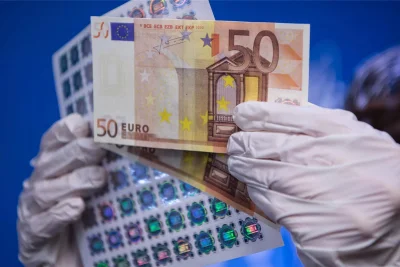 Tilt the Note Euro keeps in mind include holographic functions. When slanted, the hologram spot or strip on the front of the note need to display altering images or colors. Check the Watermark Hold the banknote up to the light. Authentic euro notes consist of a watermark that becomes noticeable and shows the banknote's value and a picture of Europa, a figure from Greek mythology. Magnify the Microprint Little lettering on authentic euro notes is crisp and clear, even under magnification. On counterfeits, the text might appear blurred or irregular. Use UV Light Under ultraviolet light, authentic euro banknotes show security threads, dynamic functions, and patterns. Counterfeit bills may either glow unnaturally or lack these components altogether. Germany's Efforts to Tackle Counterfeit Banknotes Germany has actually not turned a blind eye to the counterfeit banknote problem. The country employs a multi-faceted method to reduce the blood circulation of fake currency. Secret Interventions Include: Technological Advancements Germany works carefully with the ECB to implement cutting-edge security features in banknote designs. The most recent euro series, the “Europa Series,” incorporates improved holographic images, microtext, and color-shifting impacts. Public Awareness Campaigns Informing the general public plays an essential role in combating counterfeiting. German authorities frequently arrange projects to teach people how to identify counterfeit notes. These projects often include posters, videos, and online guides. gefälschte währung bestellen for Businesses Banks, sellers, and other services in Germany are provided with training programs to acquaint personnel with counterfeit detection strategies. Police Crackdowns German police work in partnership with Europol and Interpol to determine and dismantle counterfeiting networks. Cutting edge forensics are used to trace the origin of counterfeit notes and prosecute the offenders. Frequently Asked Questions (FAQs). 1. Is it prohibited to inadvertently use a counterfeit banknote? If an individual unconsciously utilizes a counterfeit note, they generally can not be held criminally responsible. However, they may still deal with the financial loss, as counterfeit currency can not be exchanged for legal tender. 2. What should I do if I suspect I've received a counterfeit note? If you presume a banknote is counterfeit, you need to instantly report it to the closest bank or law enforcement authority. Prevent returning it to the individual who provided it to you, as this might be considered scams. 3. Can counterfeit-detector pens reliably recognize fake notes? While counterfeit-detector pens can provide some sign of authenticity, they are not sure-fire. Examining several security functions is the most trusted method. 4. Are EUR500 notes more likely to be counterfeit? The EUR500 note has typically been connected with unlawful activities due to its high worth and has been discontinued for production. However, they are still legal tender, and while counterfeit EUR500 notes exist, other denominations like EUR20 and EUR50 are more typically targeted. 5. Who manages the design and security of euro banknotes? The European Central Bank (ECB) and the national central banks of the Eurozone, including Germany's Bundesbank, are accountable for creating and maintaining the security functions of euro banknotes. Actions to Stay Protected from Counterfeit Money. You can take proactive steps to ensure you're not unsuspectingly accepting or managing counterfeit banknotes:. Discover to acknowledge the crucial security features of genuine euro notes. Stay careful when getting big quantities of cash, particularly in high-value denominations like EUR50 and EUR100. Use counterfeit-detection tools such as magnifiers, UV lights, or scanners for included guarantee. Watch out for cash deals in informal settings, street markets, or online sales where threats are higher. fälschungen online bestellen . Counterfeit German banknotes remain a real risk to customers and businesses, in spite of the innovative security procedures incorporated into euro styles. While counterfeit notes are only a small portion of the currency in circulation, their effect on financial losses, public trust, and organized crime is considerable. By discovering to identify fake banknotes and remaining alert, individuals and organizations can assist mitigate the threats. In addition, through a combination of technology, public education, and strict law enforcement, Germany continues to lead the charge in securing its currency and securing its people. Recognizing and addressing the problem of counterfeit banknotes isn't simply a matter for governments— everyone has a role to play in ensuring the integrity of their nation's currency.